
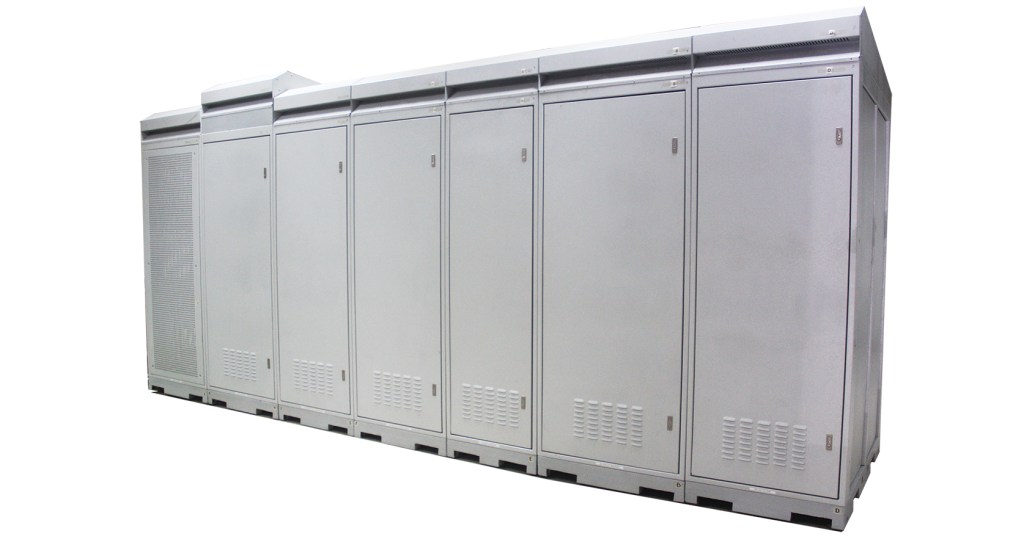
The main principle underpinning the Electromagnetic Energy-Flux Reactor’s (EER) operation is Faraday’s Law of Induction which stipulates that when a coil is — or coils of wire are — exposed to varying magnetic fields, a voltage will be induced into the coils.
With hindsight and the appropriate language we use today, we say that a current is induced in a conductor when it is inside a changing magnetic field. For this to happen, it does not matter whether it is the conducting wire or the object producing the magnetic field (either a permanent magnet or another wire with an electric current flowing through it) that is actually moving.
Prof. Jim Al-Khalili OBE FRS FInstP, on Faraday’s Law of Induction1
Similar to the principles guiding the operation of conventional generators – where a prime mover spins the rotors to produce varying magnetic fields at the stator of an alternating generator – EER simulates the same effect without the need for a rotating magnetic field, making use of electromagnetic induction feedback to contract and expand the magnetic fields in the main reactor, by making use of a network of reactors and transformers through a patented regenerative electromagnetic process.
Our EER Stationary Power Generator (EER-SPG) has minimal moving parts, do not make use of fossil fuel as input and do not emit harmful wastes or emissions to the environment. When compared to conventional power generation technologies, Sinag’s EER-SPG is able to produce electricity more efficiently.
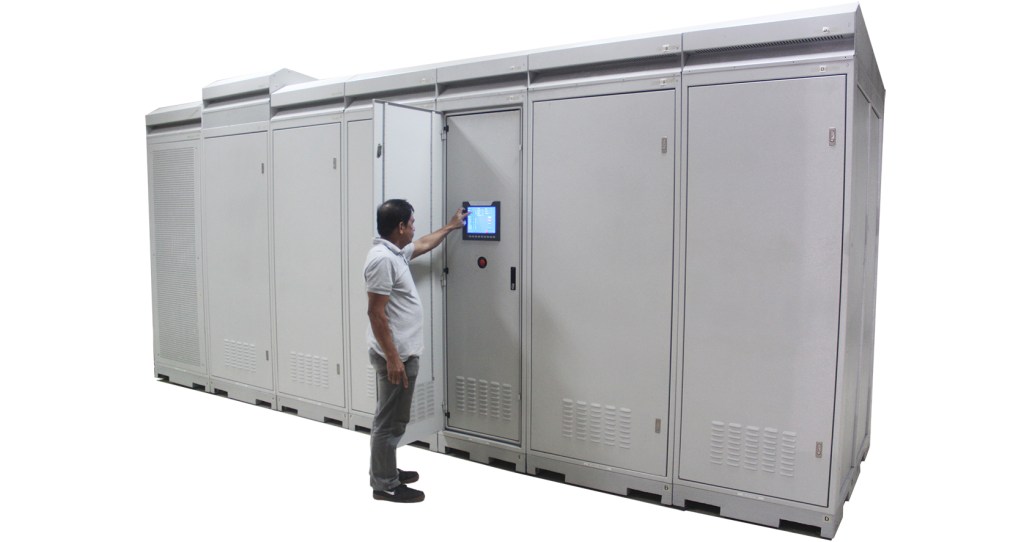
Because of this, our technology is one of the cleanest and most efficient renewable energy technologies in the market today, and we are the most appropriate solution for the fulfilment of micro-grid and distributed generation applications. For more information on the EER technology, you may refer to US Patent No. 9,444,264 B2.
1 Al-Khalili, J. 2015 The birth of the electric machines: a commentary on Faraday (1832) ‘Experimental researches in electricity’. Phil. Trans. R. Soc. A 373: 20140208. http://dx.doi.org/10.1098/rsta.2014.0208
 Sinag Global Energy